Skills for working with trauma and supporting each other to build resilient cultures.
Many people involved in socially engaged work – activism, human rights defence, and political organising – encounter violence and repression, and the accumulative influence of stresses. This can lead to post-traumatic conditions that exert a strong influence on our wellbeing, our work and lives. Knowing how to work well with trauma, to transform, mitigate and grow beyond it, can be crucial for the longevity of our activism and our groups.
This training will offer the skills and experience to increase your capacity to respond usefully to trauma. IT will help you understand what we need in place so that our groups and organisations can support each other adequately, and build a more resilient culture.
Many people involved in socially engaged work – activism, human rights defence, and political organising – encounter situations which can be traumatising. Learning to work with these experiences is key to creating resilient cultures for social change.
Direct experience of violence and repression, as well as the accumulative influence of stresses, can be traumatising. Post-traumatic conditions can have a strong influence on our wellbeing, our work and lives. Identifying and transforming these tendencies can help us to continue to bring the best of our hearts and minds to our work and lives.
An inability to identify and transform individual and group patterning associated with these issues is a common source of burnout, conflict and dysfunction in our groups and organisations. As such, addressing trauma is a political issue. Unless we learn to work with trauma, repression and violence (both overt and subtle) consistently succeed in blocking meaningful social change. Knowing how to work well with trauma, to transform, mitigate and grow beyond it, can be crucial for the longevity of our activism and our groups.
This training will offer the skills and experience to increase your capacity to respond usefully to trauma. How can we work with our own symptoms and patterns? How can we support others? How can we recognise and transform trauma as it shapes the wider social field? What do we need in place so that our groups and organisations can work well with trauma, support each other adequately, and build a more resilient culture?
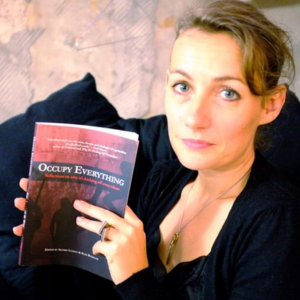
Isa (she/her) is an educator, facilitator, and author. She grew up in France before setting off on an adventure to London, where she worked as a freelance journalist, French teacher, and administrator for a community arts organisation, all while writing her PhD on the concept of community. She became Senior Lecturer in Media and Cultural Studies at Birkbeck College, University of London (UK), where she taught for 10 years before leaving academia to breathe the air of freedom and collective action. She co-founded and co-facilitates, with Jay Jordan, the Laboratory of Insurrectionary Imagination, which has been bringing together artists and activists since 2004 to co-design and implement creative forms of direct action that are as joyful as they are politically effective. Active in social movements for over 20 years, she has facilitated assemblies of several hundred people, co-organised international mobilisations and climate camps, and trained thousands of people in reinventing forms of civil disobedience. Her passion is exploring collective dynamics and all the ways in which these can be made more fruitful, joyful, and caring, particularly through popular education and rituals. She has been involved with the zad in Notre Dame des Landes since 2016.
An
Location:
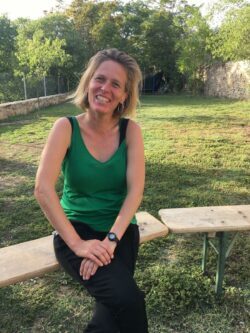
An Maeyens (she/her) is a facilitator and trainer with over two decades of experience in grassroots movements. She specialises in creative, inclusive agenda design and brings deep expertise on group culture, power dynamics, and transformative learning. Starting of in the anti-globalisation movement she has trained thousands in civil disobedience, supported international coalitions, and developed multilingual training programmes and toolkits. Her work spans movements, cultures, and countries, guided by a commitment to care, accessibility, and leaderful organising.
Ari Kajtezović
Location:
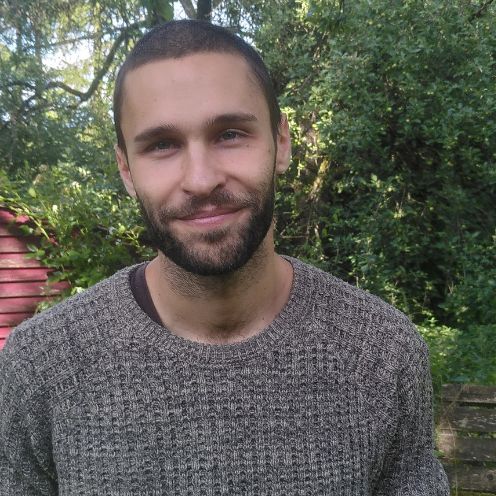
Ari’s activism began in 2002, at age 16, as a Bosnian refugee in Canada, where they founded and coordinated a group for LGBTIQ high school students and allies. They were a co-founder and leader at kolekTIRV in Croatia and Trans Network Balkan, involved in community organizing, advocacy, program management, team coordination, capacity building, education, media work, campaigns, events, fundraising, etc. In 2024, they joined the Supervisory Board of the Croatian Trade Union Collective of United Precarious Workers and Activists (SKUPA).
Beyond the Balkan region, Ari served as a Board member at Transgender Europe (TGEU), where they held roles as Secretary, Treasurer, and later Co-chair. They have also been a trainer with the Center for Artistic Activism and served on the Advisory Committee and since 2022 as a Community Care Facilitator at FRIDA — The Young Feminist Fund. Since 2024 they are the Operations Manager at Global Philanthropy Project.
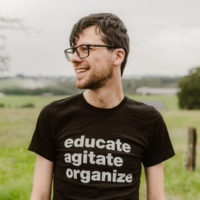
Sergio (all pronouns) was born in Romania and migrated to Germany in the early 2010s. In the past, he was a social worker with homeless people and a social consultant for Eastern European migrants for various organisations. Trained as a filmmaker, he spent two years making a documentary about the ‘civic reawakening’ in Romania and the waves of protest it brought with it. In connection to this, Sergio is currently co-steering the development of an online open-source participative knowledge production platform on activism in Romania. Over the past nine years, Sergiu has offered his skills to various journalists, grassroots collectives and campaigns, mostly working within the labour rights, climate justice, international solidarity and anti-authoritarian movements in Germany and Romania. Nonetheless, his biggest focus since 2020 has been his work as an organiser with the anarcho-syndicalist Free Workers Union, where he focuses mostly on organising Romanian migrant workers on construction sites, in factories and in the agricultural field.
Ulex: Latin (argelaga Catalan, gorse English) noun:
1. A thorny-evergreen flowering shrub, with a high capacity for regeneration and resilience. Its seedpods open in contact with fire and it reshoots from charred stumps. A successionary plant that grows well under challenging conditions. It improves soil fertility through nitrogen fixing, preparing the way for renewed biodiversity.
2. A traditional choice for igniting fires. Burns hot and bright.
3. A networked project adding nutrition and fertility to European social movements through training and capacity building. It kindles the realisation of social justice, ecological intelligence, and cognitive vitality.