Theatre of the Oppressed Training

Contact Us

To Apply

21 to 29 March 2020

From spectator to protagonist

Theatre of the Oppressed is a range of techniques, games and exercises, using embodied narrative to support the empowerment and liberation of individuals and their communities. The approach was developed by Augusto Boal in South America, and has since been used all over the world in the building of community, to dynamize social engagement, and to support individuals to realise their creative potential for personal and social transformation.

“Theatre is a form of knowledge; it should and can also be a means of transforming society. Theatre can help us build our future, rather than just waiting for it.” – Augusto Boal, Games For Actors & Non-Actors

Theatre of the Oppressed is a potent tool in the facilitation of group work, community empowerment, and the holding of liberatory conversations. This training lays the foundation praxis for you to explore the forms and tools of the key tools of Image and Forum Theatre, aswell as a host of games, techniques and exercises underpinned with the theory and philosophy of Boal’s work.

In essence, Theatre of the Oppressed utilises theatre in order to generate solutions to real problems, create dialogue where before there was only monologue, and ultimately «humanise humanity» by enabling people to develop the skills and faculties to liberate themselves and others. It creates space for a rehearsal for life. It is a way of analysing the power dynamics of our society and our personal relationships, purporting that personal problems are social problems.

This week long training will explore two fundamental aspects of Boal’s work:

  • Forum Theatre – a rich and full narrative form which enables groups to explore issues, and to look for transformative opportunities and points of intervention within their own lives.
  • Image Theatre – a set of simple forms that enable groups to hold meaningful and exploratory conversations. It is a highly participative approach that supports rich inclusivity, and is able to meet diverse needs and communication styles.

Participants can expect to gain:

  • a good understanding of the principles and values that underpin the work
  • fundamentals of the application and enactment of a variety of Image Theatre techniques
  • the knowledge and experience to devise, perform and analyse a piece of Forum Theatre
  • key skills needed to use a range of Theatre of the Oppressed tools in a variety of situations (e.g. community empowerment, campaign development, group work facilitation, conflict transformation)

“When does a session of The Theatre of the Oppressed end? Never – since the objective is not to close a cycle, to generate a catharsis, or to end a development. On the contrary, its objective is to encourage autonomous activity, to set a process in motion, to stimulate transformative creativity, to change spectators into protagonists. And it is precisely for these reasons that the Theatre of the Oppressed should be the initiator of changes the culmination of which is not the aesthetic phenomenon but real life… its objective is to become integrated into reality, into life.” – Boal

This training will be hosted at our sibling centre near the village of Abella de la Conca, in the mountains some kilometres away form the Ulex Centre itself.


Compartir
Suggested Contribution
€400/€550/€950

(See details of our approach to radical economics here)

Contact us

to apply

Equip

Equip

Isa Fremeaux

ZAD of Notre-Dame-des-Landes

Location:

ZAD of Notre-Dame-des-Landes

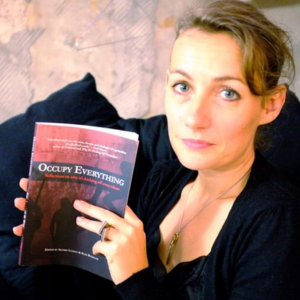
Isa (she/her) is an educator, facilitator, and author. She grew up in France before setting off on an adventure to London, where she worked as a freelance journalist, French teacher, and administrator for a community arts organisation, all while writing her PhD on the concept of community. She became Senior Lecturer in Media and Cultural Studies at Birkbeck College, University of London (UK), where she taught for 10 years before leaving academia to breathe the air of freedom and collective action. She co-founded and co-facilitates, with Jay Jordan, the Laboratory of Insurrectionary Imagination, which has been bringing together artists and activists since 2004 to co-design and implement creative forms of direct action that are as joyful as they are politically effective. Active in social movements for over 20 years, she has facilitated assemblies of several hundred people, co-organised international mobilisations and climate camps, and trained thousands of people in reinventing forms of civil disobedience. Her passion is exploring collective dynamics and all the ways in which these can be made more fruitful, joyful, and caring, particularly through popular education and rituals. She has been involved with the zad in Notre Dame des Landes since 2016.

An

Location:

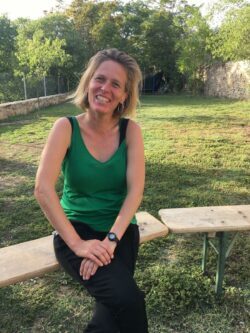
An Maeyens (she/her) is a facilitator and trainer with over two decades of experience in grassroots movements. She specialises in creative, inclusive agenda design and brings deep expertise on group culture, power dynamics, and transformative learning. Starting of in the anti-globalisation movement she has trained thousands in civil disobedience, supported international coalitions, and developed multilingual training programmes and toolkits. Her work spans movements, cultures, and countries, guided by a commitment to care, accessibility, and leaderful organising.

Ari Kajtezović

Location:

Ari’s activism began in 2002, at age 16, as a Bosnian refugee in Canada, where they founded and coordinated a group for LGBTIQ high school students and allies. They were a co-founder and leader at kolekTIRV in Croatia and Trans Network Balkan, involved in community organizing, advocacy, program management, team coordination, capacity building, education, media work, campaigns, events, fundraising, etc. In 2024, they joined the Supervisory Board of the Croatian Trade Union Collective of United Precarious Workers and Activists (SKUPA).

Beyond the Balkan region, Ari served as a Board member at Transgender Europe (TGEU), where they held roles as Secretary, Treasurer, and later Co-chair. They have also been a trainer with the Center for Artistic Activism and served on the Advisory Committee and since 2022 as a Community Care Facilitator at FRIDA — The Young Feminist Fund. Since 2024 they are the Operations Manager at Global Philanthropy Project.

Sergiu

Germany

Location:

Germany

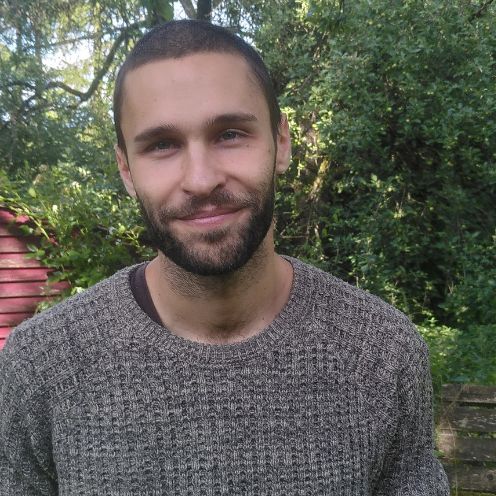
Sergio (all pronouns) was born in Romania and migrated to Germany in the early 2010s. In the past, he was a social worker with homeless people and a social consultant for Eastern European migrants for various organisations. Trained as a filmmaker, he spent two years making a documentary about the ‘civic reawakening’ in Romania and the waves of protest it brought with it. In connection to this, Sergio is currently co-steering the development of an online open-source participative knowledge production platform on activism in Romania. Over the past nine years, Sergiu has offered his skills to various journalists, grassroots collectives and campaigns, mostly working within the labour rights, climate justice, international solidarity and anti-authoritarian movements in Germany and Romania. Nonetheless, his biggest focus since 2020 has been his work as an organiser with the anarcho-syndicalist Free Workers Union, where he focuses mostly on organising Romanian migrant workers on construction sites, in factories and in the agricultural field.

Linzy Na Nakorn

Location:

Jeroen

Location:

OUR NAME

Ulex: Latin (argelaga Catalan, gorse English) noun:

1. A thorny-evergreen flowering shrub, with a high capacity for regeneration and resilience. Its seedpods open in contact with fire and it reshoots from charred stumps. A successionary plant that grows well under challenging conditions. It improves soil fertility through nitrogen fixing, preparing the way for renewed biodiversity.

2. A traditional choice for igniting fires. Burns hot and bright.

3. A networked project adding nutrition and fertility to European social movements through training and capacity building. It kindles the realisation of social justice, ecological intelligence, and cognitive vitality.