Supporting our groups and movements to weather emotional and relational challenges
Our work as facilitators and trainers often involves attending to the emotional life of the group. To do this well, we need emotional literacy. This assists group processes and supports participants to develop similar abilities for themselves. These skills are essential for collective and individual resilience, as well as creating the relational basis for effective group life.
Emotional literacy and resilience can help us to attend to the overwhelm and despair that can come up in activist work. Similarly, it is essential as a basis for conflict transformation or the transformation of unhelpful interpersonal dynamics in our collectives.
We might be familiar with this in relation to difficult conversations around things like power, privilege, trauma or harm in group spaces. It matters because our groups are never just containers for individual experience – they are the living tissue through which movements build collective power. A group that can’t hold its own emotional life rarely holds its strategic capacity either.
This course is aimed at people who already have a training/facilitation practice and want to deepen their emotional literacy skills. It aims to support facilitators to develop the emotional awareness, literacy and agency they might need in relation to their own emotional lives – capacities for presence, non-reactivity, holding complexity, skillful intervention and strength of relational contact and connection – understanding these as primary skills in service to genuine group safety and effective facilitation.
The course will ask you to pay attention to your own emotional and body processes as an aid to attending to others’ in your group and training work – do consider whether you are in a psychological position to do this.
Human beings are emotional! Emotions sit beneath our thoughts, they influence our words, actions and choices. They shape our ways of being, our ways of relating to others, and our connection to the world around us. They are a key source of nourishment, meaning and connection. They can also cause us difficulty – leaving us feeling dragged down, overwhelmed, or pushed into unhelpful or harmful behaviour. Even a ‘lack’ of emotions – numbness or disconnection – can also have big impacts on ourselves and our groups.
Often emotions can seem to simply happen to us. They arise, pleasant or unpleasant, and we feel under their power. We can sense little room to make choices about how we respond. Addressing the ways we relate to emotions, can help us develop abilities to become more aware of what comes up, and better able to hold and respond to those feelings. Gradually, our sensitivity, stability and agency are all enhanced.
This is significant for our groups and movements. The more individuals can take responsibility for our emotional lives, developing empathy and sensitivity towards others, the more we can build cultures that are genuinely expressive of the values of care and solidarity. Many of us will know what it’s like to sit in a group and make agreements about being non-judgemental and compassionate, only to find ourselves in states of resentment and polarisation down the line. Or to be facilitating a process where conflict comes up between others, and find ourselves scared and frozen, without the space around our emotions to respond helpfully.
Many of us have also been socialised into seeing emotions as inferior to the intellect, something to be controlled, or not worthy of our attention. This conditioning, shaped by colonial and patriarchal norms, affects how we relate to our emotions. It also affects how we relate to other people’s emotions and shapes the life of our groups and movements. This course will help us to encounter emotions as valuable and necessary information, an essential part of effective decision making, informing our actions from a centred place rather than driving us into reactivity.
This course will look at working with emotion, in ourselves primarily, and then in our groups – drawing on lived experience in the group, and using case studies from our wider training work. It will be an experiential course, asking you to pay attention to your own experience, as the basis for developing the skills needed to hold others’. It will look at the common dynamics and responses that occur in challenging situations in groups, and explore strategies for emotionally regulating, diffusing, inviting in, energising, opening up, stabilising and accompanying others in moving through emotional reactivity.
Areas of focus will include emotional attunement versus blending (the difference between sensing another’s emotional state and taking it on as our own), nervous system regulation and co-regulation, holding and navigating the presence of strong emotion and tension in groups, the significance of vulnerability as a capacity, and peer-to-peer support and mentoring.
It is important to us that this work is approached with recognition of the ways our own emotional maturity develops through involvement with others, in service of something larger than either the self or the group. We understand it as inseparable from the “bigger picture” work of movement building – it is one of the levels that work depends on – and it must be understood as both in service to and shaped by the wider political and systemic field.
Aims of the course:
– To support facilitators in developing their own emotional awareness, literacy and agency, as the ground from which presence, non-reactivity and skilful relational interventions become possible
– To explore unhelpful socialisation around emotion, including colonial and patriarchal conditioning, and the ways this may undermine our facilitation capacities
– To offer practical skills and sensibilities for recognising and working with the emotional and relational dynamics that commonly arise in groups, particularly where themes of power, privilege, trauma or harm are present
– To create an experiential learning space supported by peer exploration and case studies drawn from wider training and activist work
– To contribute to the resilience, adaptivity, capacity and functionality of our movements and their strategic aims.
So, the training will help you to:
– Increase awareness of your own emotional and body processes, as a foundation for attending skilfully to others’
– Build capacities for presence, sensitivity, regulation and resilience, relating to your own emotions skilfully and allowing them to inform your actions from a centred place, avoiding falling into reactivity
– Notice and begin to undo conditioning that treats emotions as lower, as something to fear or control, or as unworthy of attention
– Practise emotional attunement, co-regulation and the holding of strong emotions and tensions, and learn what helps in accompanying others through emotional reactivity
– Recognise the common dynamics and patterns that arise in groups under emotional strain, understanding these as information about the group’s capacity, not simply individual difficulty
– Learn and practise appropriate strategies and approaches for working with relational difficulty in group processes, in service to a group’s ability to do its work
– Reflect on and explore your own readiness to engage in or hold this work at any given time, recognising that a facilitator’s own capacity is itself shaped by its group and a movement contexts.
Who is it aimed at?
This training is for people already working as trainers or facilitators. It is designed for experienced facilitators with a background in social movements or political education who want to take their practice further.
In general our trainings are aimed at people involved in socially engaged action addressing ecological, political and social justice issues. We embrace a broad definition of activism, including: Resistance – action preventing further damage to ecosystems and social justice; Renewal – action focused on developing and creating alternatives for healthier societies and communities; and Building Resilience – action supporting increased resilience in communities to weather the uncertain times ahead.
The main spoken language on the course will be English.
For accessibility and venue information see here.
In the solidarity economy:
(See details of our approach to radical economics here)
Contact us
to apply

Location:
Ilaj’s background is in grassroots organising, involving them in various strands of social movement work for nearly two decades, mostly in Eastern and Southern Europe. In more recent years, they have turned their attention to broader European movement building as part of the Ulex core team, where they design programmes, coordinate training teams and facilitate on a wide range of training courses. Ilaj is an experienced trainer with a broad range of skills, particularly in holding space for collective exploration of burnout, weathering repression, navigating trauma and cultivating solidarity in social movements. They are passionate about working with body awareness as a radical means of deconstructing internalised systems of oppression. They have been exploring the intersection between transformative somatics and political organising for a number of years.

Location:
Team to be confirmed.
Location:
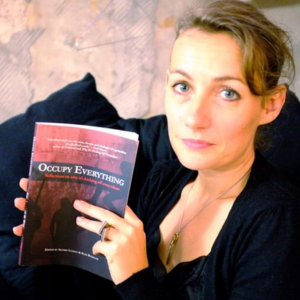
Isa (she/her) is an educator, facilitator, and author. She grew up in France before setting off on an adventure to London, where she worked as a freelance journalist, French teacher, and administrator for a community arts organisation, all while writing her PhD on the concept of community. She became Senior Lecturer in Media and Cultural Studies at Birkbeck College, University of London (UK), where she taught for 10 years before leaving academia to breathe the air of freedom and collective action. She co-founded and co-facilitates, with Jay Jordan, the Laboratory of Insurrectionary Imagination, which has been bringing together artists and activists since 2004 to co-design and implement creative forms of direct action that are as joyful as they are politically effective. Active in social movements for over 20 years, she has facilitated assemblies of several hundred people, co-organised international mobilisations and climate camps, and trained thousands of people in reinventing forms of civil disobedience. Her passion is exploring collective dynamics and all the ways in which these can be made more fruitful, joyful, and caring, particularly through popular education and rituals. She has been involved with the zad in Notre Dame des Landes since 2016.
Location:
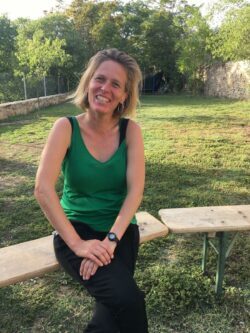
An Maeyens (she/her) is a facilitator and trainer with over two decades of experience in grassroots movements. She specialises in creative, inclusive agenda design and brings deep expertise on group culture, power dynamics, and transformative learning. Starting of in the anti-globalisation movement she has trained thousands in civil disobedience, supported international coalitions, and developed multilingual training programmes and toolkits. Her work spans movements, cultures, and countries, guided by a commitment to care, accessibility, and leaderful organising.

Location:
Ari’s activism began in 2002, at age 16, as a Bosnian refugee in Canada, where they founded and coordinated a group for LGBTIQ high school students and allies. They were a co-founder and leader at kolekTIRV in Croatia and Trans Network Balkan, involved in community organizing, advocacy, program management, team coordination, capacity building, education, media work, campaigns, events, fundraising, etc. In 2024, they joined the Supervisory Board of the Croatian Trade Union Collective of United Precarious Workers and Activists (SKUPA).
Beyond the Balkan region, Ari served as a Board member at Transgender Europe (TGEU), where they held roles as Secretary, Treasurer, and later Co-chair. They have also been a trainer with the Center for Artistic Activism and served on the Advisory Committee and since 2022 as a Community Care Facilitator at FRIDA — The Young Feminist Fund. Since 2024 they are the Operations Manager at Global Philanthropy Project.
Location:
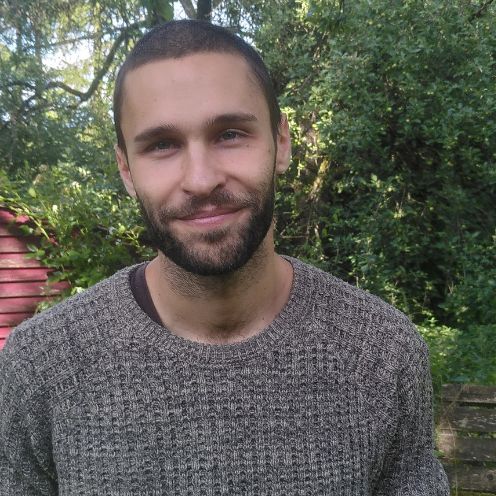
Sergio (all pronouns) was born in Romania and migrated to Germany in the early 2010s. In the past, he was a social worker with homeless people and a social consultant for Eastern European migrants for various organisations. Trained as a filmmaker, he spent two years making a documentary about the ‘civic reawakening’ in Romania and the waves of protest it brought with it. In connection to this, Sergio is currently co-steering the development of an online open-source participative knowledge production platform on activism in Romania. Over the past nine years, Sergiu has offered his skills to various journalists, grassroots collectives and campaigns, mostly working within the labour rights, climate justice, international solidarity and anti-authoritarian movements in Germany and Romania. Nonetheless, his biggest focus since 2020 has been his work as an organiser with the anarcho-syndicalist Free Workers Union, where he focuses mostly on organising Romanian migrant workers on construction sites, in factories and in the agricultural field.

Location:
Linzy Na Nakorn is a movement director, politicised somatics practitioner, community organiser and facilitator. For the past decade she has been facilitating movement, body work and creating theatre, dance and participatory performance that advocates for and organises with communities in pursuit of housing, disability and racial justice. Her movement practice focuses on trauma-informed approaches to building resilience, capacity and joy via way of the body for personal, interpersonal and community sustainability. Linzy was a Co-Director of The Big Ride for Palestine in partnership with The Gaza Sunbirds, Native Woman Ride and Middle East Children’s Alliance; using cycling as a tool for mobilising active solidarity and in support of campaigning for the rights and self-determination of the Palestinian people. Linzy is part of a UK network of activists and artists advocating for Radical Care – supporting organisations, researchers and institutions to work towards system change in societal approaches to labour, leadership and access.
Location:
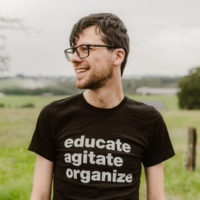
Jeroen (he/him pronouns) has been involved in grassroots social movements for more than two decades now, starting back when he was fifteen. Throughout the years the fights for “climate justice” and “migrant justice” have been consistently on top of the list of struggles that make his heart beat faster. A key transformative moment for Jeroen was reading Paulo Freire’s Pedagogy of the Oppressed. Freire’s revolutionary pedagogy gave him a language to support the creation of emancipatory learning environments, rooted in a desire for collective liberation. Jeroen has also been exploring in depth Boal’s Theatre of the Oppressed and Joanna Macy’s The Work That Reconnects among other methodologies to build his trainer’s toolkit. Inspired by the liberatory possibilities of these traditions, he started an organization with a friend, LABO vzw, based in Belgium, where he has worked as a trainer and campaigner between 2013 and 2023.
Ulex: Latin (argelaga Catalan, gorse English) noun:
1. A thorny-evergreen flowering shrub, with a high capacity for regeneration and resilience. Its seedpods open in contact with fire and it reshoots from charred stumps. A successionary plant that grows well under challenging conditions. It improves soil fertility through nitrogen fixing, preparing the way for renewed biodiversity.
2. A traditional choice for igniting fires. Burns hot and bright.
3. A networked project adding nutrition and fertility to European social movements through training and capacity building. It kindles the realisation of social justice, ecological intelligence, and cognitive vitality.