A holistic approach to activist training and education.
This Training of Trainers course aims to support BPOC activists wanting to grow into trainer roles, using holistic methods of education and facilitation to support social change. The course offers a space to explore a range of approaches to designing politicised education, strengthen holistic facilitation skills, and reflect on the personal and relational dimensions of working in groups and organisations.
Ulex Project courses and events use an Integral Activist Training approach. Recognising the interconnected nature of the personal, the interpersonal/group and the political dimensions, our trainings aim to address integrated transformation in all three spheres. This training of trainers will share what we’ve learnt about this kind of holistic approach over the last 10 years, so you can apply it to your work as trainers.
This course is open to only BPOC/racialised activist trainers. By bringing together people with shared experiences of racialised oppression, we aim to support a space that is both safer and more courageous — where, among other things, participants can speak freely from their own positionality, go deeper into the specific challenges they face as trainers, and learn from each other without having to explain or justify common experiences. We also hope it can increase movement wide capacity for training led by racialised people in ways that contribute to efforts to challenge structural racism.
Change is multi-layered. The social field, our organisational cultures, and the individuals within them exist in mutual dependence upon each other. Integral Activist Training supports integrated transformation on all of these levels. It is the educational approach that runs through all our courses. It starts from a simple recognition: lasting social change requires transformation at every level — in how we think and act as individuals, in how we work together, and in how movements are built and sustained.
Integral Activist Training (IAT) is primarily transformative — Activism is characterised by taking action to achieve societal change. So, as the name Integral Activist Training implies, it is primarily concerned with learning that builds capacity for socio-political transformation. To do this, we emphasise the idea that effective activist learning needs to support transformation at three interrelated levels: the (intra)personal, the interpersonal and the socio-political. We aim to simultaneously support individual and organisational development that is directly connected with building social movement power.
IAT is holistic – it engages the whole person within the systems we are connected to and shaped by. To learn effectively we must honour the full spectrum of our humanity: thoughts, emotions, senses, bodies and relationships. This means sharpening the intellect while also engaging the heart. It means working with the body, and being connected to the more-than-human. Emotional awareness, embodied process, and relational capacity are what allow learning to take root, moving it from the theoretical into lived experience.
IAT is participatory — it draws on the traditions of popular education. Participatory approaches ask for active, collective participation from everyone, understanding that when we learn together, something greater emerges – ideas, insights, and energy we couldn’t have found alone. It means everyone taking responsibility for their learning, building educative structures that can adapt to needs responsively, and staying open to what can arise spontaneously and collectively.
IAT embodies solidarity — understanding that training that builds solidarity needs to be proactively collective, while being conscious of difference and not trying to homogenise diverging opinions or cultural experience. It needs to attend to dynamics of oppression, and work to manifest values of accessibility, care and non-violence, creating spaces that can help to hold and heal trauma, and go beyond shame and blame. Education based in solidarity supports the building of skills and approaches to enrich intersectionality and capacities to forge transversal alliances across our movements.
The course will aim to bring in aspects and awareness of each of these dimensions. Participants will engage with a range of methods for holding learning spaces, supporting group processes, and responding to power dynamics with care and clarity. The training will combine practical tools, reflective exercises, peer learning, and facilitated dialogue, allowing participants to learn from shared experience while developing their own facilitation practice.
Aims of the course:
So, the workshop will help participants to:
Who is it aimed at?
Anyone with experience in socially engaged action addressing ecological, political and social justice issues, who identifies as BPOC/racialised/targeted by racism. We embrace a broad definition of activism that includes any form of contribution to change and social and ecological justice. That might include: Resistance – action preventing further damage to ecosystems and social justice; Renewal – action focused on developing and creating alternatives for healthier societies and communities; and Building Resilience – action supporting increased resilience in communities to weather the uncertain times ahead.
The main spoken language on the course will be English.
For accessibility and venue information see <here>.
In the solidarity economy:
(See details of our approach to radical economics here)
Contact us
to apply

Location:
Team to be confirmed.
Location:
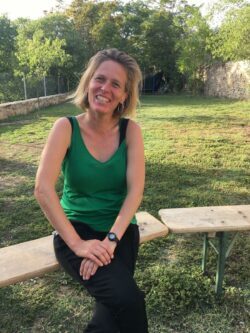
An Maeyens (she/her) is a facilitator and trainer with over two decades of experience in grassroots movements. She specialises in creative, inclusive agenda design and brings deep expertise on group culture, power dynamics, and transformative learning. Starting of in the anti-globalisation movement she has trained thousands in civil disobedience, supported international coalitions, and developed multilingual training programmes and toolkits. Her work spans movements, cultures, and countries, guided by a commitment to care, accessibility, and leaderful organising.

Location:
Ari’s activism began in 2002, at age 16, as a Bosnian refugee in Canada, where they founded and coordinated a group for LGBTIQ high school students and allies. They were a co-founder and leader at kolekTIRV in Croatia and Trans Network Balkan, involved in community organizing, advocacy, program management, team coordination, capacity building, education, media work, campaigns, events, fundraising, etc. In 2024, they joined the Supervisory Board of the Croatian Trade Union Collective of United Precarious Workers and Activists (SKUPA).
Beyond the Balkan region, Ari served as a Board member at Transgender Europe (TGEU), where they held roles as Secretary, Treasurer, and later Co-chair. They have also been a trainer with the Center for Artistic Activism and served on the Advisory Committee and since 2022 as a Community Care Facilitator at FRIDA — The Young Feminist Fund. Since 2024 they are the Operations Manager at Global Philanthropy Project.
Location:
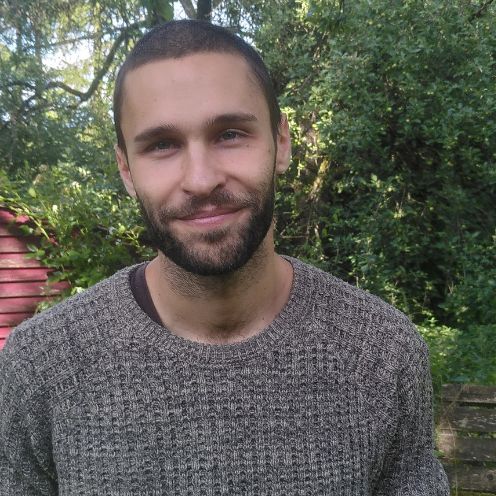
Sergio (all pronouns) was born in Romania and migrated to Germany in the early 2010s. In the past, he was a social worker with homeless people and a social consultant for Eastern European migrants for various organisations. Trained as a filmmaker, he spent two years making a documentary about the ‘civic reawakening’ in Romania and the waves of protest it brought with it. In connection to this, Sergio is currently co-steering the development of an online open-source participative knowledge production platform on activism in Romania. Over the past nine years, Sergiu has offered his skills to various journalists, grassroots collectives and campaigns, mostly working within the labour rights, climate justice, international solidarity and anti-authoritarian movements in Germany and Romania. Nonetheless, his biggest focus since 2020 has been his work as an organiser with the anarcho-syndicalist Free Workers Union, where he focuses mostly on organising Romanian migrant workers on construction sites, in factories and in the agricultural field.
Location:
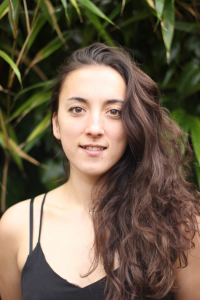
Linzy Na Nakorn is a movement director, politicised somatics practitioner, community organiser and facilitator. For the past decade she has been facilitating movement, body work and creating theatre, dance and participatory performance that advocates for and organises with communities in pursuit of housing, disability and racial justice. Her movement practice focuses on trauma-informed approaches to building resilience, capacity and joy via way of the body for personal, interpersonal and community sustainability. Linzy was a Co-Director of The Big Ride for Palestine in partnership with The Gaza Sunbirds, Native Woman Ride and Middle East Children’s Alliance; using cycling as a tool for mobilising active solidarity and in support of campaigning for the rights and self-determination of the Palestinian people. Linzy is part of a UK network of activists and artists advocating for Radical Care – supporting organisations, researchers and institutions to work towards system change in societal approaches to labour, leadership and access.
Location:
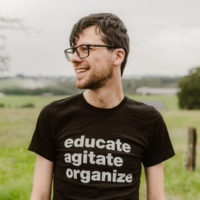
Jeroen (he/him pronouns) has been involved in grassroots social movements for more than two decades now, starting back when he was fifteen. Throughout the years the fights for “climate justice” and “migrant justice” have been consistently on top of the list of struggles that make his heart beat faster. A key transformative moment for Jeroen was reading Paulo Freire’s Pedagogy of the Oppressed. Freire’s revolutionary pedagogy gave him a language to support the creation of emancipatory learning environments, rooted in a desire for collective liberation. Jeroen has also been exploring in depth Boal’s Theatre of the Oppressed and Joanna Macy’s The Work That Reconnects among other methodologies to build his trainer’s toolkit. Inspired by the liberatory possibilities of these traditions, he started an organization with a friend, LABO vzw, based in Belgium, where he has worked as a trainer and campaigner between 2013 and 2023.
Location:
Ella brings more than 10 years’ external experience working with not for profit and community based organisations across diverse themes including: advocacy for migrant communities; local community engagement in national policy making; and structural relationships between poverty and disenfranchisement, and education and poverty. Immersed in critical theory in her early 20s she brings a holistic and questioning approach, and is passionate about systemic solutions that centre relationship and interconnection between ecology and society. A long standing member of the collective, Ella has been part of the core team since the inception of the Ulex Project. Her work bridges facilitation, developing project partnerships, governance, strategy, operations, and project and programme evaluation. She has developed and overseen more than 70 partnerships with a range of different actors across European social movements.
Ulex: Latin (argelaga Catalan, gorse English) noun:
1. A thorny-evergreen flowering shrub, with a high capacity for regeneration and resilience. Its seedpods open in contact with fire and it reshoots from charred stumps. A successionary plant that grows well under challenging conditions. It improves soil fertility through nitrogen fixing, preparing the way for renewed biodiversity.
2. A traditional choice for igniting fires. Burns hot and bright.
3. A networked project adding nutrition and fertility to European social movements through training and capacity building. It kindles the realisation of social justice, ecological intelligence, and cognitive vitality.