Building capacity to counter the new right.
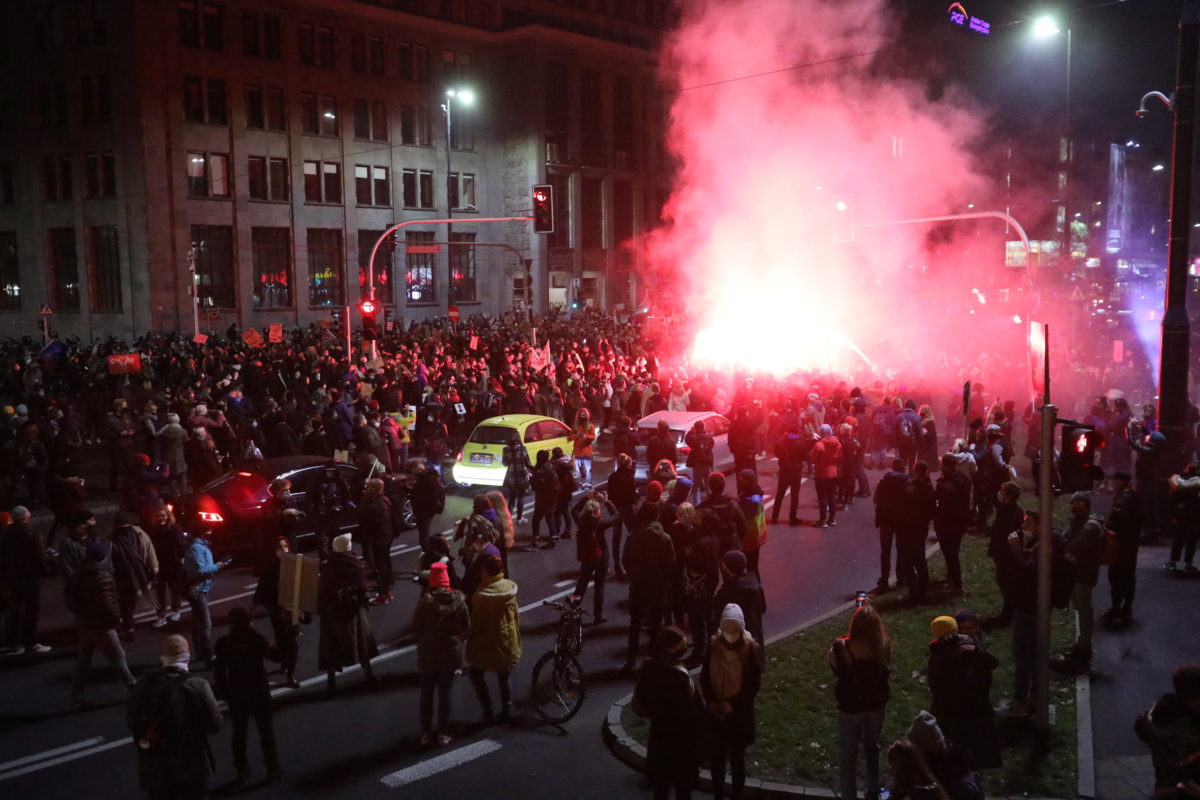
As the neoliberal world order becomes undone, we are involved in a vital contest over the future. Within the pluri-crisis, the new right is gaining the upper hand. Combining renewed autocratic strategies with nationalist populism, it harnesses growing discontent with stalled economic growth and the negative impacts of capitalist globalisation. Across Europe, both the left and liberal progressives are on the back foot. How can we build capacity within our movements to push back? What is needed to resist the growth of the far right? How can we offer alternatives that can undermine the appeal of these reactive forces? How can we build a counter force grounded in solidarity?
These are big questions and the road ahead will be challenging. A training like this cannot realistically aim to offer all the answers. But it can support us to become better equipped to analyse the socio-political conditions we work within, to identify the challenges and opportunities that exist, and to begin to strategise more effectively to build capacity to make a real difference.
This will be a space where, together, we can:
We will bring together experienced activists from across the Ulex network of partner organisations and actors, to gather valuable case studies and experience, enabling us to learn from each others’ work. We will also be inviting people having important impacts on these issues to join us online, to offer presentations and prompt discussion that can enhance our understanding.
Key areas will include:
Who is it aimed at?
This training is aimed at experienced organisers whose work involves them directly facing the challenges of the growth of the far right and their narratives. You should be embedded in movement work in such a way that learning from this training can be used to directly strengthen efforts to organise to counter the far right.
Preparation
Participants will be asked to prepare an analysis of the ways the far right and far right narratives are shaping the context they work within. These can be presented as a short written document or audio/video message. It should include: 1. Identifying key far right actors, their strategies and tactics; 2. The historical background to their emergence, as well as current socio-political conditions that support their development; 3. Actors building counter power and forms of resistance/opposition to the far right in your context: 4. Optional step: All of the above provides a basic context analysis, so, if possible think further on relevant opportunities and threats that currently exist. To accepted participants we will provide a secure method for sharing these documents with us, which will be treated as confidential and only made available to the trainers and participants.
The main spoken language on the course will be English.
For accessibility and venue information see <here>.
In the solidarity economy:
(See details of our approach to radical economics here)
Contact us
to apply

Location:
Hilal Demir, an anarcha-queer DJing at home is an activist, trainer, facilitator for 20 + years and has experience on organizing, strategizing on nonviolent direct action, campaign and social movement levels, working with power, active solidarity, resilience, repression and security. She is passionate about leading informal learning experiences, community organizing, group dynamics and organisational cultures, supporting activists and organizations to build long lasting transformative social movements for a just future.
Location:
G has been involved in social movement organising and education since the late 1980’s. He is a highly regarded trainer and has designed numerous training programmes covering areas such as psychosocial resilience in activism, the ecology of social movements, and leaderful organising. As a founding member of the Ulex Project, he is known for highly innovative work blending pedagogical methodologies. This holistic approach to activist learning has inspired numerous training initiatives across Europe. He currently steers the strategic development of the Ulex Project and its social movement capacity building programme.
Location:
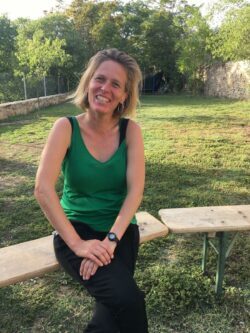
Isa (she/her) is an educator, facilitator, and author. She grew up in France before setting off on an adventure to London, where she worked as a freelance journalist, French teacher, and administrator for a community arts organisation, all while writing her PhD on the concept of community. She became Senior Lecturer in Media and Cultural Studies at Birkbeck College, University of London (UK), where she taught for 10 years before leaving academia to breathe the air of freedom and collective action. She co-founded and co-facilitates, with Jay Jordan, the Laboratory of Insurrectionary Imagination, which has been bringing together artists and activists since 2004 to co-design and implement creative forms of direct action that are as joyful as they are politically effective. Active in social movements for over 20 years, she has facilitated assemblies of several hundred people, co-organised international mobilisations and climate camps, and trained thousands of people in reinventing forms of civil disobedience. Her passion is exploring collective dynamics and all the ways in which these can be made more fruitful, joyful, and caring, particularly through popular education and rituals. She has been involved with the zad in Notre Dame des Landes since 2016.
Location:
An Maeyens (she/her) is a facilitator and trainer with over two decades of experience in grassroots movements. She specialises in creative, inclusive agenda design and brings deep expertise on group culture, power dynamics, and transformative learning. Starting of in the anti-globalisation movement she has trained thousands in civil disobedience, supported international coalitions, and developed multilingual training programmes and toolkits. Her work spans movements, cultures, and countries, guided by a commitment to care, accessibility, and leaderful organising.

Location:
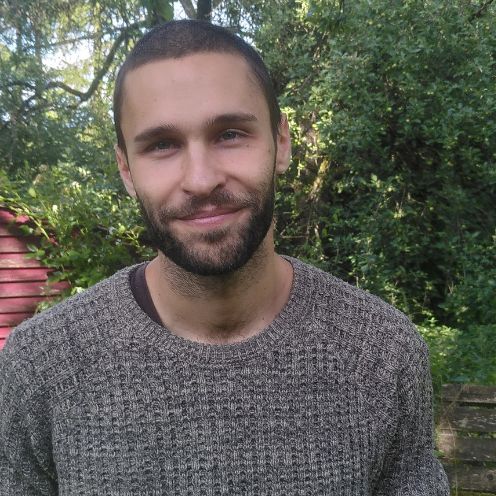
Ari’s activism began in 2002, at age 16, as a Bosnian refugee in Canada, where they founded and coordinated a group for LGBTIQ high school students and allies. They were a co-founder and leader at kolekTIRV in Croatia and Trans Network Balkan, involved in community organizing, advocacy, program management, team coordination, capacity building, education, media work, campaigns, events, fundraising, etc. In 2024, they joined the Supervisory Board of the Croatian Trade Union Collective of United Precarious Workers and Activists (SKUPA).
Beyond the Balkan region, Ari served as a Board member at Transgender Europe (TGEU), where they held roles as Secretary, Treasurer, and later Co-chair. They have also been a trainer with the Center for Artistic Activism and served on the Advisory Committee and since 2022 as a Community Care Facilitator at FRIDA — The Young Feminist Fund. Since 2024 they are the Operations Manager at Global Philanthropy Project.
Location:
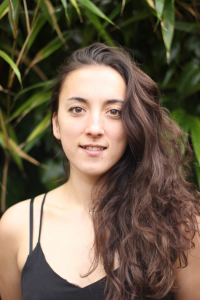
Sergio (all pronouns) was born in Romania and migrated to Germany in the early 2010s. In the past, he was a social worker with homeless people and a social consultant for Eastern European migrants for various organisations. Trained as a filmmaker, he spent two years making a documentary about the ‘civic reawakening’ in Romania and the waves of protest it brought with it. In connection to this, Sergio is currently co-steering the development of an online open-source participative knowledge production platform on activism in Romania. Over the past nine years, Sergiu has offered his skills to various journalists, grassroots collectives and campaigns, mostly working within the labour rights, climate justice, international solidarity and anti-authoritarian movements in Germany and Romania. Nonetheless, his biggest focus since 2020 has been his work as an organiser with the anarcho-syndicalist Free Workers Union, where he focuses mostly on organising Romanian migrant workers on construction sites, in factories and in the agricultural field.
Location:
Linzy Na Nakorn is a movement director, politicised somatics practitioner, community organiser and facilitator. For the past decade she has been facilitating movement, body work and creating theatre, dance and participatory performance that advocates for and organises with communities in pursuit of housing, disability and racial justice. Her movement practice focuses on trauma-informed approaches to building resilience, capacity and joy via way of the body for personal, interpersonal and community sustainability. Linzy was a Co-Director of The Big Ride for Palestine in partnership with The Gaza Sunbirds, Native Woman Ride and Middle East Children’s Alliance; using cycling as a tool for mobilising active solidarity and in support of campaigning for the rights and self-determination of the Palestinian people. Linzy is part of a UK network of activists and artists advocating for Radical Care – supporting organisations, researchers and institutions to work towards system change in societal approaches to labour, leadership and access.
Location:
Jeroen (he/him pronouns) has been involved in grassroots social movements for more than two decades now, starting back when he was fifteen. Throughout the years the fights for “climate justice” and “migrant justice” have been consistently on top of the list of struggles that make his heart beat faster. A key transformative moment for Jeroen was reading Paulo Freire’s Pedagogy of the Oppressed. Freire’s revolutionary pedagogy gave him a language to support the creation of emancipatory learning environments, rooted in a desire for collective liberation. Jeroen has also been exploring in depth Boal’s Theatre of the Oppressed and Joanna Macy’s The Work That Reconnects among other methodologies to build his trainer’s toolkit. Inspired by the liberatory possibilities of these traditions, he started an organization with a friend, LABO vzw, based in Belgium, where he has worked as a trainer and campaigner between 2013 and 2023.
Ulex: Latin (argelaga Catalan, gorse English) noun:
1. A thorny-evergreen flowering shrub, with a high capacity for regeneration and resilience. Its seedpods open in contact with fire and it reshoots from charred stumps. A successionary plant that grows well under challenging conditions. It improves soil fertility through nitrogen fixing, preparing the way for renewed biodiversity.
2. A traditional choice for igniting fires. Burns hot and bright.
3. A networked project adding nutrition and fertility to European social movements through training and capacity building. It kindles the realisation of social justice, ecological intelligence, and cognitive vitality.