Outils pour un militantisme efficace et durable.
Cet atelier propose un ensemble d’outils, à la fois collectifs et individuels, visant à rendre nos engagements militants plus efficaces et plus durables. Ces méthodes peuvent nous aider à prévenir l’épuisement militant et à nous inscrire dans le temps long, en renforçant la continuité de la construction de nos mouvements.
Elles permettent également de veiller à ce que les dimensions collectives et organisationnelles de nos pratiques militantes soient en cohérence avec les valeurs que nous défendons.
Une approche « régénérative » va au-delà de la seule durabilité : elle explore la manière dont nous pouvons nous organiser de façon à renouveler et revitaliser nos ressources individuelles et collectives. Cela nous aide à rester inspiré·es, nourri·es et plus créatif·ves dans nos stratégies et nos modes d’action.
Celles et ceux d’entre nous qui œuvrent pour le changement social sont confronté·es à des défis immenses. Chaque jour, nous faisons face aux injustices, à la répression policière et judiciaire, aux pertes et aux souffrances qui traversent le monde qui nous entoure. Nous sommes aussi confronté·es à nos propres réactions : peurs, frustrations, colère, anxiété.
Comment accueillir et travailler ces réactions de manière créative afin de servir au mieux nos objectifs ? Où trouver les ressources personnelles et les compétences qui peuvent rendre notre engagement plus efficace et soutenable dans la durée?
Et quels outils collectifs mobiliser pour permettre à nos groupes, organisations et réseaux d’incarner davantage les valeurs que nous défendons dans leurs pratiques et leur fonctionnement?
Nous utilisons le terme « régénératif » parce que nous ne voulons pas nous limiter à la seule notion de durabilité. À l’image des principes de l’agroécologie, nous cherchons à construire des systèmes capables de se régénérer, à travers des processus qui restaurent, renouvellent et revitalisent leurs propres sources d’énergie et de ressources.
Nos pratiques d’organisation et de militantisme peuvent devenir des espaces dans lesquels nous pouvons nous épanouir, en créant un cadre collectif qui nous permette de grandir tout en soutenant les autres à faire de même.
S’organiser de manière régénérative, c’est porter une vision affirmatrice de la vie, et incarner concrètement, dans nos modes d’action et de fonctionnement, les valeurs de justice sociale que nous aspirons à voir advenir dans le monde. C’est aussi puiser dans la créativité et l’imagination pour savoir se renouveler et renouveler ses modes d’action.
La formation explore ces questions à l’aide de méthodes holistiques et participatives, s’appuyant sur l’éducation populaire, la pensée écologique et systémique, ainsi que sur des pratiques réflexives. Elle réunira des militant·es de diverses organisations et pays d’Europe afin de partager des pratiques, croiser les expériences et de renforcer les réseaux.
Les objectifs de la formation:
Ainsi, l’atelier aidera les participant·es à:
1.1 Prendre conscience de l’importance de prendre soin de soi et être mieux équipé·e pour intégrer concrètement cette dimension dans sa vie quotidienne et militante.
1.2 Apprendre des manières de développer un meilleur équilibre personnel, plus de clarté, d’inspiration et de résilience, notamment grâce à des pratiques réflexives et contemplatives.
1.3 Explorer des enjeux et des outils liés à la gestion de l’énergie, des peurs, des frustrations, du découragement et du désespoir, afin de prévenir le durcissement émotionnel et le cynisme.
2.1 Mieux comprendre les compétences nécessaires au travail en groupe, notamment sur les questions de communication, les dominations systémiques et de gestion des conflits, afin de transformer les situations qui vous épuisent.
2.2 Acquérir de l’expérience dans des méthodes d’organisation et de création de communautés qui traduisent les valeurs que nous portons et renforcent les capacités personnelles et collectives.
2.3 Examiner les questions relatives à l’autonomisation, au leadership, à la compréhension des dynamiques de pouvoir et aux processus collectifs.
3.1 Réfléchir en profondeur à son propre parcours militant, en identifiant les schémas, habitudes et tendances qui le traversent, et trouver des moyens de les transformer de manière consciente et constructive lorsque cela est nécessaire.
3.2 Identifier et mobiliser les sources de ressources, d’énergie et d’inspiration qui soutiennent son engagement militant et permettent de déployer pleinement son potentiel en tant qu’organisateur·ice et acteur·ice du changement social doté·e de pouvoir d’agir.
À qui s’adresse-t-il ?
À toute personne impliquée dans des actions sociales engagées en faveur de la justice écologique, politique et sociale. Nous adoptons une définition large du militantisme, qui inclut : la résistance – des actions visant à empêcher de nouveaux dommages aux écosystèmes et à la justice sociale ; le renouveau – des actions centrées sur le développement et la création d’alternatives pour des sociétés et des communautés plus saines ; et le renforcement de la résilience – des actions qui soutiennent la capacité des communautés à faire face aux temps incertains à venir.
La langue principale utilisée pendant le cours sera le français.
Pour plus d’informations sur l’accessibilité et le lieu, voir <ici>.
In the solidarity economy:
(See details of our approach to radical economics here)
Contact us
to apply

Location:
Team to be confirmed.
Location:
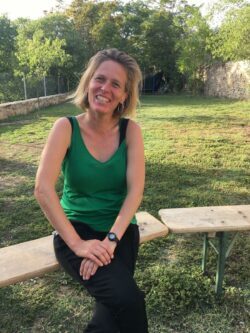
An Maeyens (she/her) is a facilitator and trainer with over two decades of experience in grassroots movements. She specialises in creative, inclusive agenda design and brings deep expertise on group culture, power dynamics, and transformative learning. Starting of in the anti-globalisation movement she has trained thousands in civil disobedience, supported international coalitions, and developed multilingual training programmes and toolkits. Her work spans movements, cultures, and countries, guided by a commitment to care, accessibility, and leaderful organising.

Location:
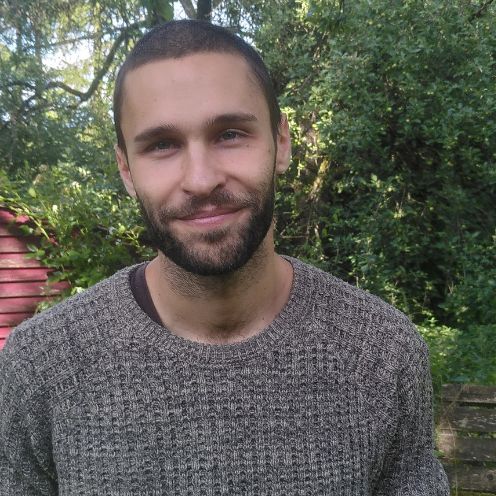
Ari’s activism began in 2002, at age 16, as a Bosnian refugee in Canada, where they founded and coordinated a group for LGBTIQ high school students and allies. They were a co-founder and leader at kolekTIRV in Croatia and Trans Network Balkan, involved in community organizing, advocacy, program management, team coordination, capacity building, education, media work, campaigns, events, fundraising, etc. In 2024, they joined the Supervisory Board of the Croatian Trade Union Collective of United Precarious Workers and Activists (SKUPA).
Beyond the Balkan region, Ari served as a Board member at Transgender Europe (TGEU), where they held roles as Secretary, Treasurer, and later Co-chair. They have also been a trainer with the Center for Artistic Activism and served on the Advisory Committee and since 2022 as a Community Care Facilitator at FRIDA — The Young Feminist Fund. Since 2024 they are the Operations Manager at Global Philanthropy Project.
Location:
Sergio (all pronouns) was born in Romania and migrated to Germany in the early 2010s. In the past, he was a social worker with homeless people and a social consultant for Eastern European migrants for various organisations. Trained as a filmmaker, he spent two years making a documentary about the ‘civic reawakening’ in Romania and the waves of protest it brought with it. In connection to this, Sergio is currently co-steering the development of an online open-source participative knowledge production platform on activism in Romania. Over the past nine years, Sergiu has offered his skills to various journalists, grassroots collectives and campaigns, mostly working within the labour rights, climate justice, international solidarity and anti-authoritarian movements in Germany and Romania. Nonetheless, his biggest focus since 2020 has been his work as an organiser with the anarcho-syndicalist Free Workers Union, where he focuses mostly on organising Romanian migrant workers on construction sites, in factories and in the agricultural field.

Location:
Linzy Na Nakorn is a movement director, politicised somatics practitioner, community organiser and facilitator. For the past decade she has been facilitating movement, body work and creating theatre, dance and participatory performance that advocates for and organises with communities in pursuit of housing, disability and racial justice. Her movement practice focuses on trauma-informed approaches to building resilience, capacity and joy via way of the body for personal, interpersonal and community sustainability. Linzy was a Co-Director of The Big Ride for Palestine in partnership with The Gaza Sunbirds, Native Woman Ride and Middle East Children’s Alliance; using cycling as a tool for mobilising active solidarity and in support of campaigning for the rights and self-determination of the Palestinian people. Linzy is part of a UK network of activists and artists advocating for Radical Care – supporting organisations, researchers and institutions to work towards system change in societal approaches to labour, leadership and access.
Location:
Jeroen (he/him pronouns) has been involved in grassroots social movements for more than two decades now, starting back when he was fifteen. Throughout the years the fights for “climate justice” and “migrant justice” have been consistently on top of the list of struggles that make his heart beat faster. A key transformative moment for Jeroen was reading Paulo Freire’s Pedagogy of the Oppressed. Freire’s revolutionary pedagogy gave him a language to support the creation of emancipatory learning environments, rooted in a desire for collective liberation. Jeroen has also been exploring in depth Boal’s Theatre of the Oppressed and Joanna Macy’s The Work That Reconnects among other methodologies to build his trainer’s toolkit. Inspired by the liberatory possibilities of these traditions, he started an organization with a friend, LABO vzw, based in Belgium, where he has worked as a trainer and campaigner between 2013 and 2023.
Location:
Ella brings more than 10 years’ external experience working with not for profit and community based organisations across diverse themes including: advocacy for migrant communities; local community engagement in national policy making; and structural relationships between poverty and disenfranchisement, and education and poverty. Immersed in critical theory in her early 20s she brings a holistic and questioning approach, and is passionate about systemic solutions that centre relationship and interconnection between ecology and society. A long standing member of the collective, Ella has been part of the core team since the inception of the Ulex Project. Her work bridges facilitation, developing project partnerships, governance, strategy, operations, and project and programme evaluation. She has developed and overseen more than 70 partnerships with a range of different actors across European social movements.
Ulex: Latin (argelaga Catalan, gorse English) noun:
1. A thorny-evergreen flowering shrub, with a high capacity for regeneration and resilience. Its seedpods open in contact with fire and it reshoots from charred stumps. A successionary plant that grows well under challenging conditions. It improves soil fertility through nitrogen fixing, preparing the way for renewed biodiversity.
2. A traditional choice for igniting fires. Burns hot and bright.
3. A networked project adding nutrition and fertility to European social movements through training and capacity building. It kindles the realisation of social justice, ecological intelligence, and cognitive vitality.